
TL;DR — Key Takeaways
- Legacy migration gets an AI makeover: SnapLogic’s enhanced SLIM engine uses AI agents to reverse engineer middleware metadata and generate integration pipelines, reducing dependence on costly manual migration work.
- Smarter planning, faster execution: New capabilities assess integration dependencies, recommend migration starting points and support concurrent operations, giving IT teams greater control over modernization projects.
- AI challenges legacy vendor lock-in: By lowering migration costs, agentic AI could make replacing expensive legacy platforms more practical, freeing IT budgets for innovation rather than maintenance.
SnapLogic has added an ability to reduce migration costs to its platform by applying artificial intelligence (AI) agents to reverse engineer the metadata of legacy middleware platforms.
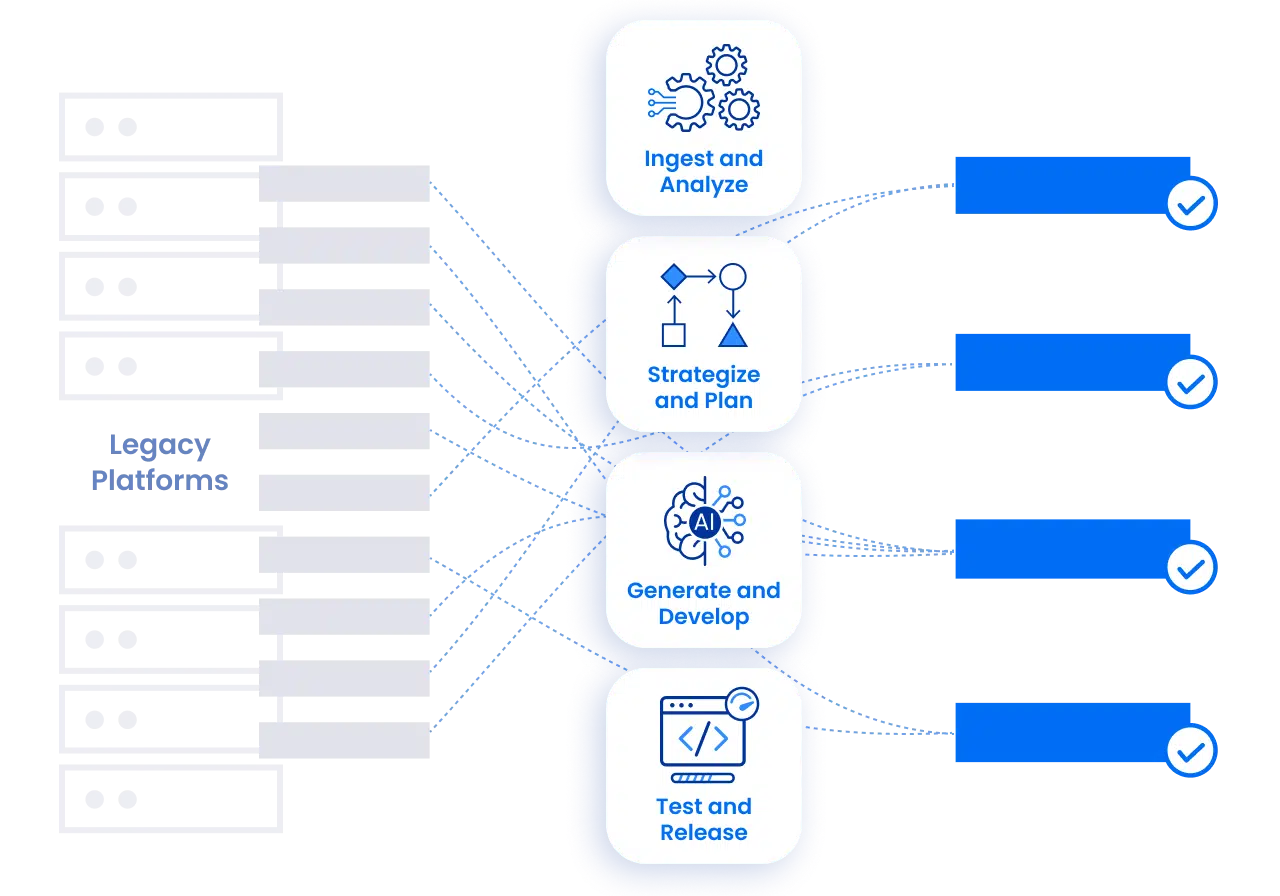
Company CTO Jeremiah Stone said the agentic AI enhancements to the SnapLogic Intelligent Modernizer (SLIM) analysis and generation engine the company developed will reduce the cost of migrating applications to its integration platform.
Unfortunately, many of the legacy middleware platforms, such as application servers that IT teams have deployed over the decades, lack extensive documentation. As a result, migrating off those platforms has historically required a lot of expensive manual effort, noted Stone.
AI agents, however, make it simpler to use the metadata those platforms expose to reverse engineer and generate the code needed to reduce the total cost of a migration by analyzing workload and generating pipelines without requiring a purpose-built connector for every source platform, said Stone.
Specifically, SLIM can assess integrations, including how they relate to one another, to recommend a logical starting point to help teams determine where to begin. Additionally, SLIM operations can now run concurrently. IT teams can also provide additional context and rerun agents to refine generated results.
SnapLogic has also extended the administration tools it provides to strengthen tenant boundaries and provide configurable personas, role-based access, and visibility controls. Improved handling of long-running agentic operations and explicit status reporting also give IT teams greater visibility into incomplete workflows.
In general, it’s become apparent that generative AI is reducing the cost of application migrations to the point where organizations are much less locked into any given platform or application. Historically, organizations would typically need to contract an IT service firm to manually migrate code from one platform to another, a process that in some cases could require a year or more of effort. Providers of platforms and applications have counted on the fact that the cost of migrating to a new platform was generally too high to justify the cost of the effort.
The challenge is that the maintenance fees levied by providers of legacy platforms are significant. In fact, many IT organizations are unable to innovate as much as they would like simply because the bulk of budget dollars allocated to IT are spent on maintaining legacy systems, noted Stone. Agentic AI creates an opportunity to reduce those costs to the point where they generate a significant opportunity to reduce the total cost of IT, he added.
It’s not clear how aggressively organizations are looking to replace legacy platforms but pressure to reduce costs is always high. AI agents have the potential to reduce those costs to the point where the number of these initiatives might substantially increase in the months ahead.
In the meantime, IT teams would be well-advised to create an inventory of all the legacy applications and platforms they currently manage. After all, the cost of maintaining and securing the platform relied on to run those applications is often a lot higher than many organizations fully appreciate.