

Nutanix today added additional capabilities to its cloud platform to provide more options over how workloads are deployed and governed, including now on-premises IT environments.
Additionally, the company has added a Nutanix Infrastructure Manager automation tool to streamline deployments of validated, fully tested design patterns and revealed that Nutanix Data Lens, a software-as-a-services (SaaS) offering for monitoring and securing data, will soon be extended to on-premises environments.
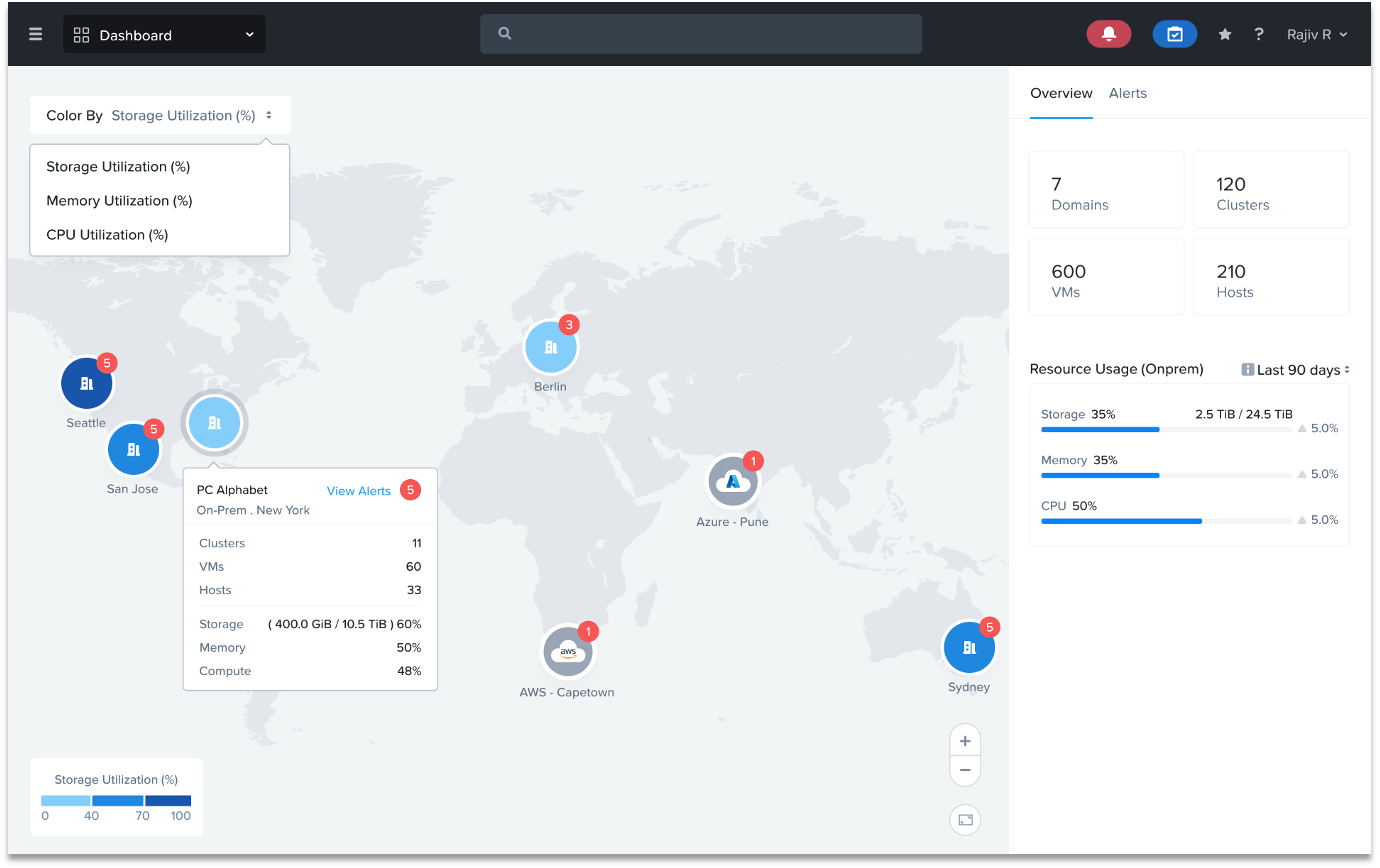
Lee Caswell, senior vice president of product and solutions marketing, said these extensions to Nutanix Cloud Platform (NCP) make it more feasible for IT teams to manage via the Nutanix Central control plane sovereign clouds that either they create or provision via a cloud service provider.
Those platforms can run either monolithic applications on the Nutanix virtual machine, or cloud native and artificial intelligence (AI) workloads on the Nutanix Kubernetes Platform (NKP) or Nutanix Enterprise AI (NAI) platforms, which now includes a dashboard for monitoring large language models (LLMs).
Nutanix also announced that it has extended the reach of its offerings by making Nutanix Cloud Clusters (NC2) generally available on Google Cloud, while extending the number of regions it makes that platform available on Amazon Web Services (AWS) and Microsoft Azure Clouds. The Nutanix Government Cloud Clusters (GC2) platform is also now available on AWS.
NKP will also include a FIPS 140-3–validated and STIG-compliant Ubuntu Pro image option with additional capabilities such as support for virtual provide clouds (VPCs), network load balancing, and microsegmentation capabilities to containerized workloads planned. A unified network control plane provides a single view of VLANs, virtual networks, and microsegmentation policies, giving administrators centralized visibility and control across the entire network, including on-premise and public cloud environments.
Finally, NC2 on Azure and AWS has completed its annual SOC 2 Type 2 audit and achieved the renewal of its ISO 27001, 27017, 27018, 27701, and 22301 certifications.
Collectively, the capability will enable IT teams to build and deploy secure instances of highly distributed computing environments that are more resilient, said Caswell. IT teams will also be able to take advantage of tiered disaster recovery options that tailor protection levels to each workload, he added.
Each organization will need to determine for itself what level of autonomy is required to build and deploy a sovereign cloud. In Europe, for example, many organizations are embracing Eurostack, a framework that requires every element of an IT stack to not only be made in Europe but also managed locally by IT teams based in Europe to ensure that restrictions that might be applied under the U.S. Clarifying Lawful Overseas Use of Data (CLOUD) Act can not impact their IT operations.
Regardless of approach, the one thing that is clear is that sovereign clouds are becoming a global phenomenon that is being more widely embraced as the political climate continues to change. The issue then becomes how to manage all those distinct cloud computing environments while keeping increased costs to the absolute minimum required.