
The prospect of AI data centers in space is solidifying as SpaceX and NVIDIA say they will jointly develop the Starmind AI1 satellite to process AI workloads in low-Earth orbit (LEO).
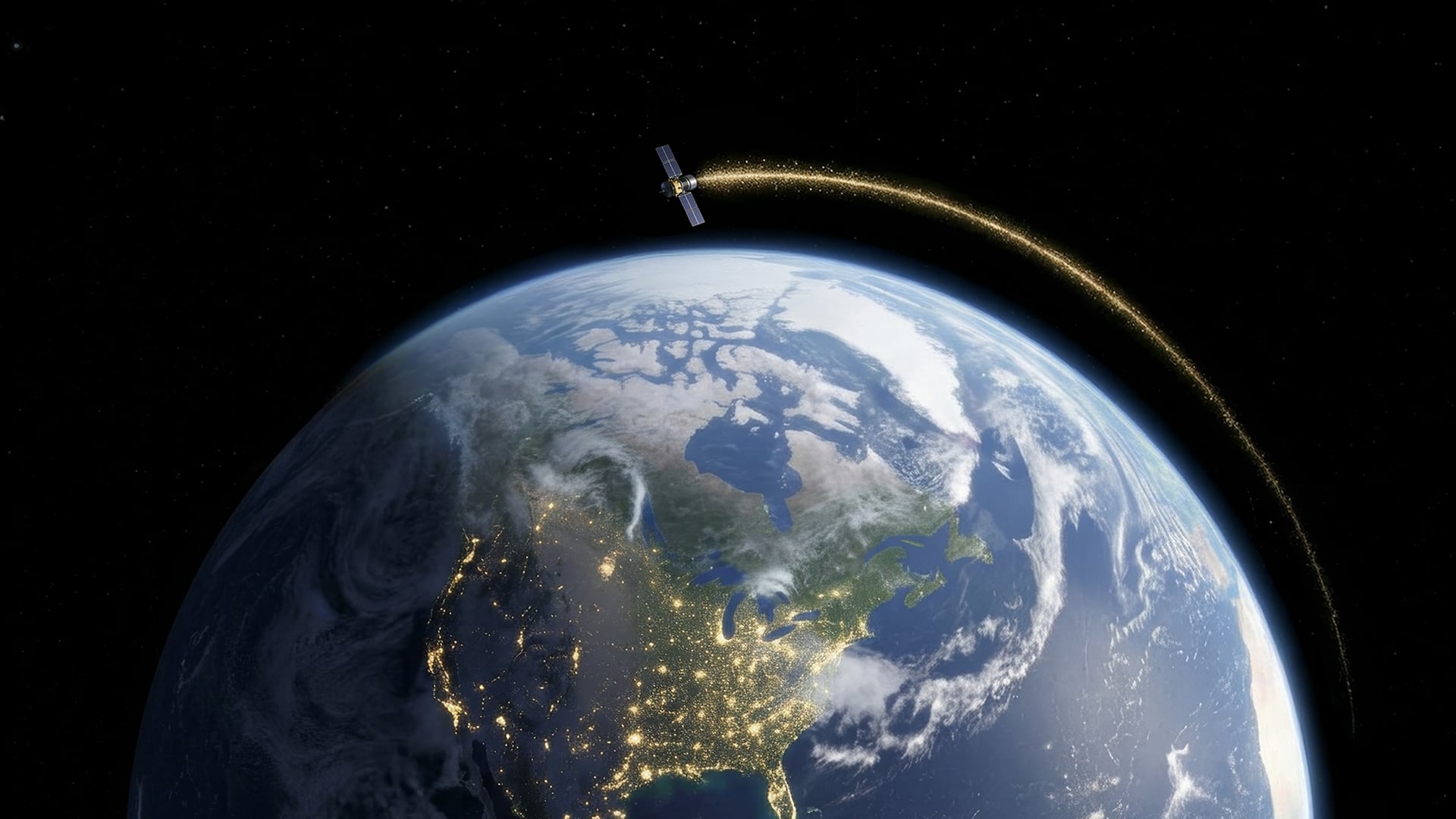
The two companies say Starmind satellites will be powered by NVIDIA’s Vera CPUs and Rubin GPUs. SpaceX boss Elon Musk explained the NVIDIA tie-up by simply saying “they are the best.” NVIDIA says its Space-1 Vera Rubin module can deliver up to 25 times the AI processing performance of its H100 GPU.
The scale of the undertaking is nothing if not ambitious. SpaceX earlier this year petitioned the Federal Communications Commission (FCC) to deploy as many as one million orbital data center satellites between roughly 311 and 1,243 miles above the Earth. The AI satellites would exchange data using high-speed laser links. The SpaceX AI network would dwarf today’s existing satellite constellations, which number about 15,000 in total. Prototype testing for Starmind is scheduled for 2027 with mass production set for the following year.
“Our goal over time is to launch 100 gigawatts of compute to space each year. If operated continuously, the generation resources used to support 100 gigawatts of compute could generate approximately one-fifth of the annual power production in the United States, which was 4.4 thousand terawatt-hours in 2025,” said SpaceX in its May filing. “We expect space-based compute to massively increase AI compute scale while also improving token economics.”
AI satellites in orbit have an obvious attraction in their ability to take advantage of non-stop, free solar power. They also circumvent the limitations of terrestrial AI data centers, among which is increasing public opposition.
NVIDIA, for its part, last month signaled its AI computing chips are robust enough for space use when it became part of Firefly Aerospace’s moon mission slated for later this year. The NVIDIA Jetson AI module will be used to process images on board the spacecraft, eliminating the need for massive data downlinks to Earth.
Behind the scenes, technical challenges also are being addressed. Late last year, researchers at Germany’s JMU successfully demonstrated an AI altitude controller for satellites in orbit. SpaceX’s FCC filing for a wide range of orbital altitudes suggests maneuverability is in the cards for Starmind satellites.
Similarly, a lightweight heat dissipation device made from a composite material combining carbon fiber and graphite makes planar antennas 47 percent lighter. It was developed with satellite communications in mind through a joint effort by several Japanese companies. Heat dissipation in the vacuum of space is a major challenge that can affect a satellite’s potential longevity. There’s no atmosphere to cool things down.
Meanwhile, back on Earth, analysts suggest that satellite direct-to-device (D2D) services may be on the cusp of a boom beyond existing emergency applications. As multiple LEO constellations scale toward full operational capacity beyond 2026, direct satellite connectivity is expected to become a standard feature on many mobile computing devices. If Musk’s vision becomes fully realized, Starmind will be reachable by phone.