Why Are We Doing Kubernetes?
Escaping the buzz and hype around Kubernetes seems impossible these days. Clearly the platform has won the container orchestration wars and has been embraced by developers.
In Enterprise IT, we often see technology vendors begin life with a singular purpose. They see a problem, create a solution, and do one thing really well. As the product matures and the company is focused on growth, additional products and features are added. Some of them are good and some of them…not so good. Rarely do we see a technology company iterate off their initial product and continue to excel with new products and features.
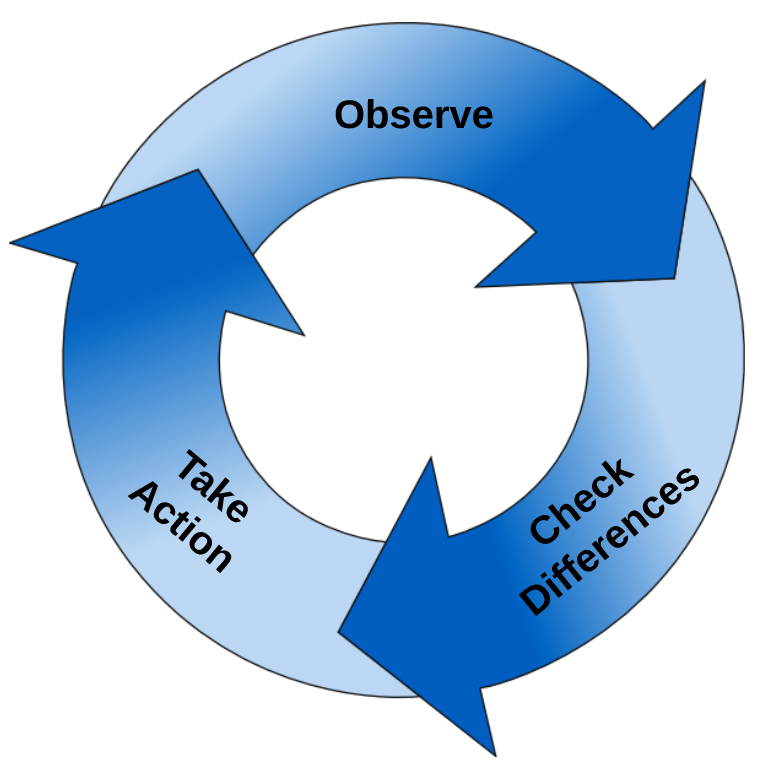
Curious how Kubernetes seems to magically achieve your desired state? When you pass you YAML file to the Kubernetes API and stuff just happens, what is going on? Eric Shanks breaks down the basics of the control loop that Kubernetes uses to accomplish this.
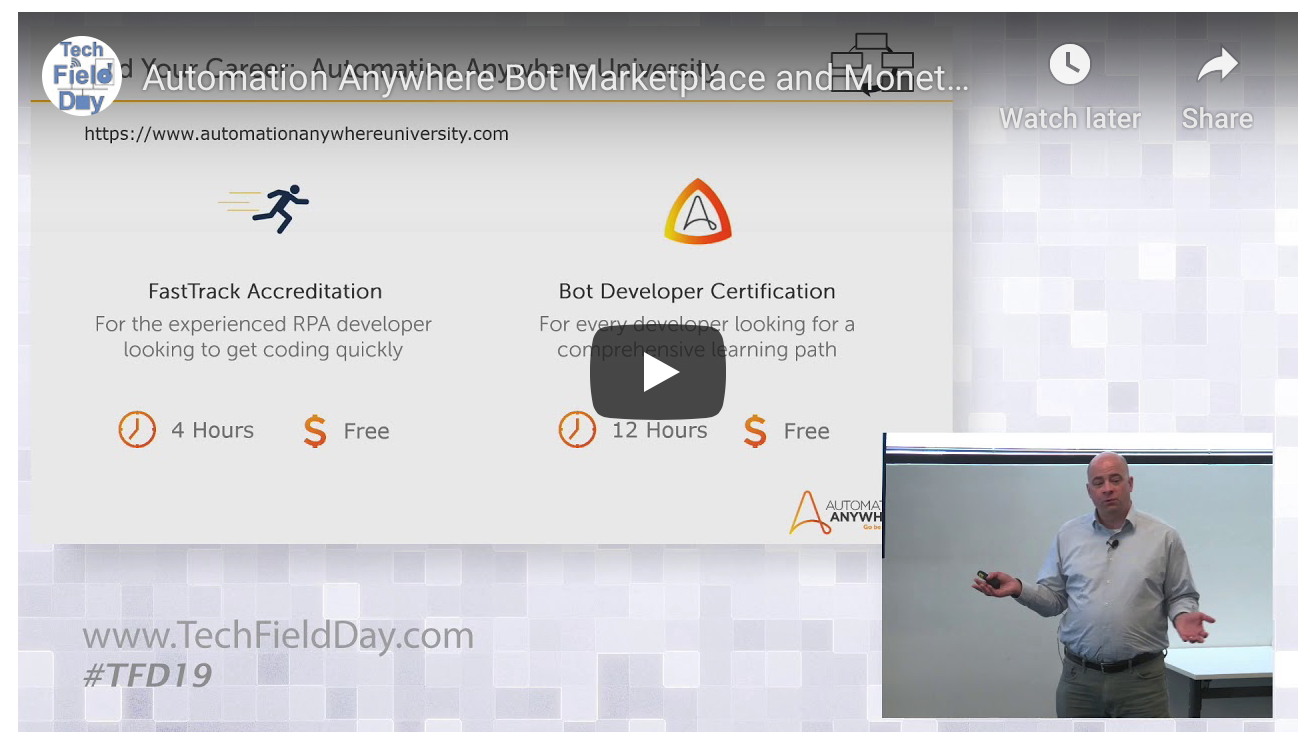
Automation has been mainstream for a long time when you think about it, however, the types of automation typically seen were machines and robots designed to perform manual tasks. Many of the repeatable tasks performed by humans today are done in software, so why not automate all the repetitive business processes being performed by task workers? As part of a digital transformation project, RPA from companies like Automation Anywhere can help companies realize greater efficiencies and better user experiences
When AWS announced their Outpost product in late 2018 there was much excitement around the possibility of bringing native AWS service and VMware Cloud on AWS into the data center for situations where data and applications were latency sensitive and needed to be placed closer to the user. As details have emerged about architecture and delivery, Chris Evans has noticed that the offering could present a potential conflict with traditional enterprise IT hardware vendors.
As public cloud has grown, there was likely a perception that it would be a threat to smaller service providers. However, cloud means something different to every organization, and the needs of every enterprise are not necessarily met by a hyperscaler.
Josh Warcop suggests that IT organizations borrow a role from manufacturing and production floors called “the floater” to address the difficulty in enabling IT silos to communicate. A floater had enough knowledge of each silos operations and elements to keep the “big machine” running smoothly.
For organizations that are not enterprise class and size, there is a need for storage solutions tailored to their use case. Even at a small size, massive amounts of data are being created and it is difficult to keep up with the amount of storage and availability of that storage when keeping things on premises. Backblaze helps fill the void for customers who need cloud storage now.
To provide a complete picture of infrastructure usage and offer optimization recommendations regardless of location be it private, public, or hybrid cloud, NetApp has recently released Cloud Insights. During his presentation at Tech Field Day 19, James Holden, director of NetApp’s cloud analytics team, provided both an overview of and deep dive into the features and functionality of Cloud Insights.
Hyperconverged Infrastructure has mature to the point where most organizations view it not as a primary selling point, but as an implementation detail. Yet, as any good architect knows, details matter. Matt Leib has designed for many customers and wants to ensure that he is paying attention to the details that matter regardless of the architecture being use, be it HCI or otherwise.