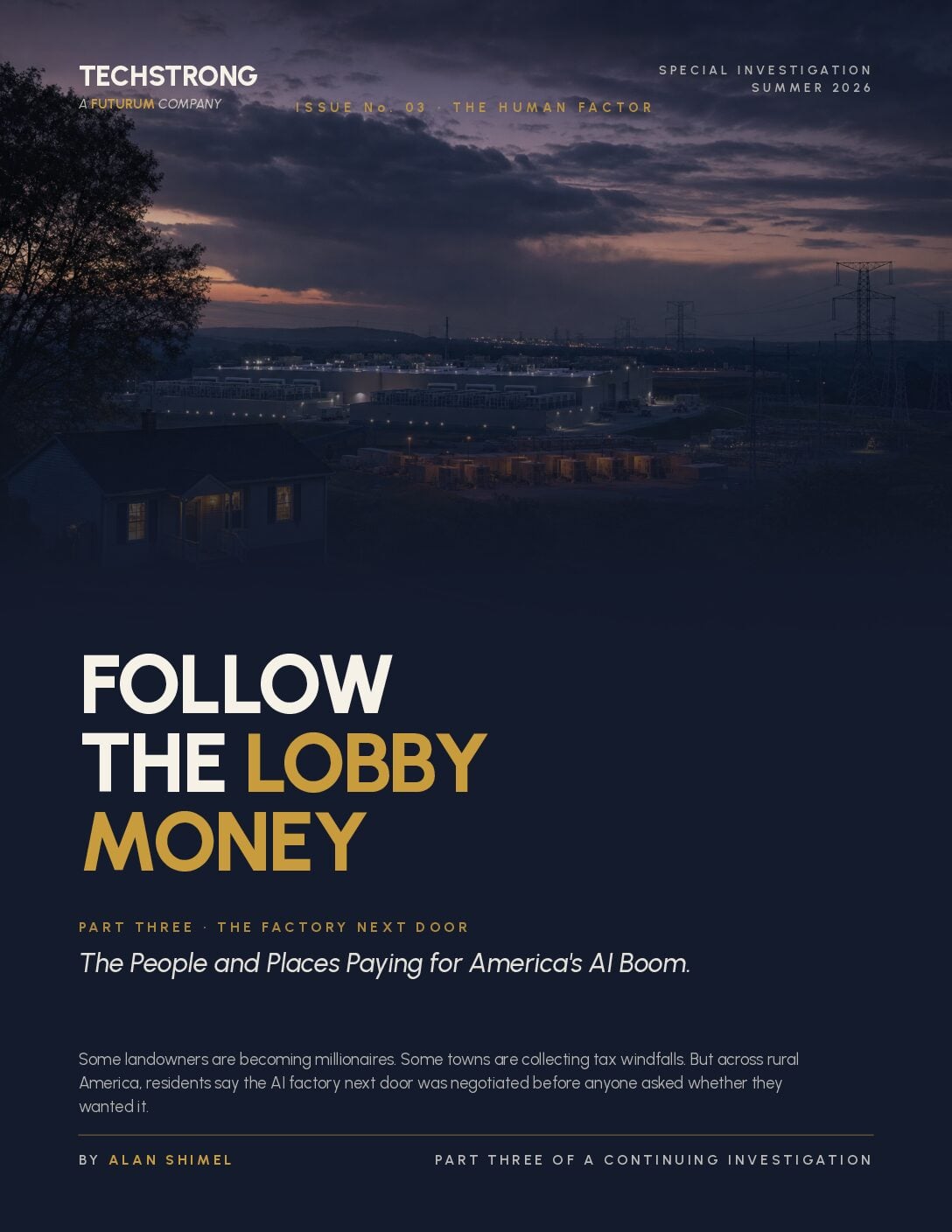
The AI infrastructure buildout is no longer a Silicon Valley story. It is a state-capitol story, a school-board story, and — increasingly — a monthly electric-bill story. From El Paso to Cheyenne to Salem Township, hyperscale campuses are landing faster than local governments can price the tradeoffs. Part Three of Techstrong’s Follow the Lobby Money series follows that money — and the people it is running over.
A recent Gallup poll found a majority of Americans now oppose a data center being built in their community. That opposition is showing up as ordinances, moratoriums and lawsuits — and, this month, as the Texas governor pausing new large-load approvals pending an audit. The political honeymoon that carried the industry through 2024 and 2025 is ending in real time.
The numbers explain the backlash. McKinsey now projects $6.7 trillion in global data-center capex by 2030, with $5.2 trillion of it tied to AI workloads. Virginia’s own legislative watchdog has documented utilities shifting infrastructure costs from data-center tenants onto residential ratepayers, even as Rocky Mountain Institute analysts warn that utility load forecasts may be overstating national demand by as much as 25 gigawatts.
Part Three walks readers through the Wildcat Ridge fight in Pennsylvania, the $586 million abatement in Salem Township, Michael Hicks’s analysis of the fiscal drag on 254 Texas counties, and the case SELC is building against xAI’s Colossus site outside Memphis. The pattern is consistent: rushed approvals, undisclosed lobbying spend, and cost curves that bend away from the communities hosting the load.
The report also names the pressure points where this reverses — from the Cheyenne water episode already forcing utilities to rewrite reuse contracts, to the Ratepayer Protection Pledge giving states a template to make hyperscalers pay their own way. Read Part Three for the map — and the money trail.